
Documentation
This function renders a list of recent BlogEntries in the given web. Only published postings will be rendered as well as those not tagged "blogonly". Each posting's teaser will be extracted. See also:Parameters
- SKIP: number of items to skip, default 0
- LIMIT: number of items to show, default 4
- THEWEB: web holding blog entries, default Blog
- CAT: categories to extract (optional)
- TAG: tagged entries to be extracted (optional)
- SHOWREVINFO: on/off, default on
- STICKY
Implementation
%STARTINCLUDE%<noautolink>%DBQUERY{
  "TopicType=~'\bBlogEntry\b' AND State='published' AND Tag!~'\bblogonly\b'
   %IF{"'%CAT{default=""}%' != ''"
      then=" AND topic ISA '%CAT%'"
   }%%IF{"'%TAG{default=""}%' != ''"
      then=" AND Tag=~'\b%TAG%\b'"
   }%%IF{"'%STICKY{default="foobar"}%' != 'foobar'"
      then=" AND Sticky=~'\b%STICKY%\b'"
  }% AND (preferences.CONTENT_LANGUAGE='%LANGUAGE%' OR ('%LANGUAGE%'='%DEFAULTLANGUAGE%' AND !preferences.CONTENT_LANGUAGE))"
  exclude="WebTopicEditTemplate"
  web="%THEWEB{default="Blog"}%"
  sort="publishdate"
  %IF{"'%STICKY{default=""}%' != ''"
    then="header=\"<div class='blogEntriesSticky'>\" footer=\"</div>\""
  }%
  format="<div class='blogEntry clearfix'>
   <div class='foswikiTopicInfo'>
   <h2>[[$web.$topic]]
      <div class='foswikiTopicSummary'>$expand(Summary)</div>
   </h2>
   %IF{"'%SHOWREVINFO{default="on"}%'='on'"
      then="$dollarpercntDBCALL{\\"%WEB%.%TOPIC%\\" section=\\"revinfo\\" web=\\"$web\\" topic=\\"$topic\\"}$dollarpercnt"
   }%</div>
   <div class='blogText hyphenate clearfix'>
$percntDBCALL{\"$web.$topic\" section=\"teaser\" warn=\"off\"}$percnt<!-- -->
   </div>
   <div class='blogMore'>[[$percntIF{\"'$expand(TargetPage)'\" then=\"$expand(TargetPage)\" else=\"$web.$topic\"}$percnt][%TRANSLATE{"Read more"}%]]</div>
  </div>"
  separator="$n"
  limit="%LIMIT{default="4"}%"
  skip="%SKIP{default="0"}%"
  reverse="on"
  hidenull="on"
}%%ADDTOZONE{"head"
  id="BLOGPLUGIN::CSS"
  text="<link rel='stylesheet' href='%PUBURLPATH%/%SYSTEMWEB%/BlogPlugin/build/blogplugin.css'  media='all' />"
}%<style>
.blogEntry h2 {
  border-bottom:1px solid var(--color-border);
}
.blogEntry h2,
.blogEntry h2 a {
   color:var(--color-h2);
}
.blogEntry .blogMore {
   margin-top:var(--margin);
}
</style>
</noautolink>%STOPINCLUDE%
Revision Info
%STARTSECTION{"revinfo"}%<div class="foswikiRevision blogInfo">
%DBQUERY{
web="%web%"
topic="%topic%"
format="%JQICON{"ma-calendar-month"}% <span itemprop='datePublished' content='$formatTime(publishdate, '$year-$mo-$day')'>$formatTime(publishdate)</span>
<span class='foswikiRevisionSep'>|</span> %JQICON{"ma-person"}% $percntFORMATLIST{
\"$expand(Author or createauthor)\"
split=\"\s*,\s*\"
format=\"$dollarpercntIF{\\"istopic '%USERSWEB%.$1'\\" then=\\"<a href='$dollarpercntSCRIPTURLPATH{\\"view\\" topic=\\"%USERSWEB%.$1\\"}$dollarpercnt' rel='author' itemprop='author' class='foswikiUserField' data-wiki-name='$1'>$dollarpercntGETTOPICTITLE{%USERSWEB%.$1}$dollarpercnt</a>\\" else=\\"<nop>$1\\"}$dollarpercnt\"
separator=\", \"
}$percnt
$percntIF{\"'$expand(total_likes)'>0\"
then=\"<span class='foswikiRevisionSep'>|</span> %JQICON{"ma-thumb-up"}% $expand(total_likes)\"
}$percnt $percntIF{\"'$expand(comment[])'!=''\"
then=\"<span class='foswikiRevisionSep'>|</span> %JQICON{"fa-comment"}% $expand(comment[])\"
}$percnt<!-- -->"
}%
%CATINFO{
"%web%.%topic%"
exclude="TopCategory"
header="<span class='foswikiRevisionSep'>|</span> %JQICON{"fa-folder"}% "
format="<a href='$url' rel='tag' itemprop='keywords' class='$name'>$title</a>"
}% <!-- -->
%TAGINFO{
"%web%.%topic%"
header="<span class='foswikiRevisionSep'>|</span> %JQICON{"fa-tag"}% "
format="<a href='$url' rel='tag' itemprop='keywords' class='$class'>$name</a>"
}% <!-- -->
</div>%ENDSECTION{"revinfo"}%
Test
Was RandomUser über GMLS-EdTech sagen
Aus der wundersamen Welt der AI-EdTech-Startups
Derzeit spriessen die EdTech-Startups, die Schulen und Hochschulen Unterstützung mit KI-Hilfe bieten wollen, wie Pilze aus dem Boden. Das Praktische daran: Wer zwar schon sein KI-Produkt, aber evtl. noch keine User-Testimonials hat, kann die auch gleich mit KI generieren lassen. Zum Beispiel hier:
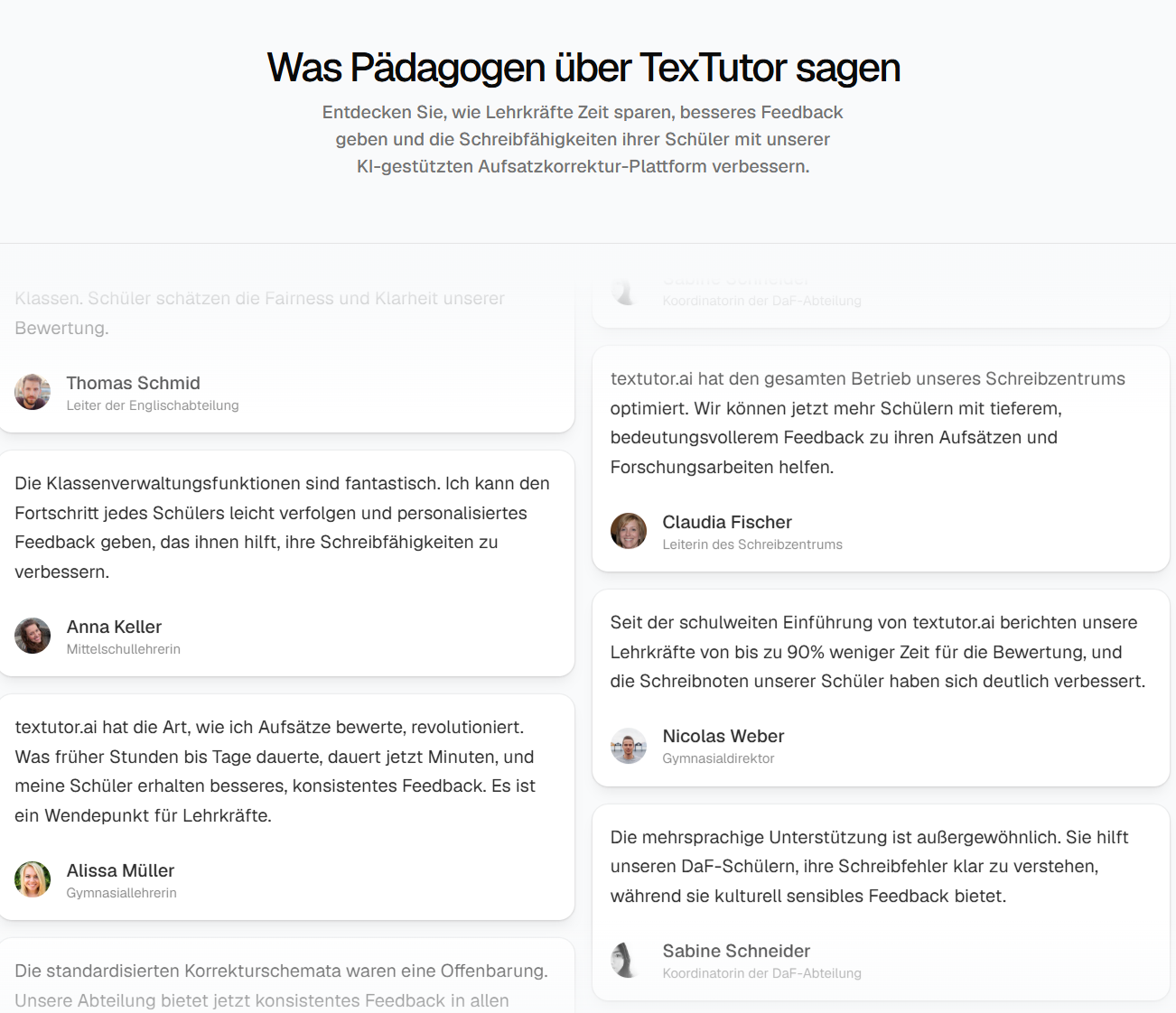
Klingt doch gut, was diese User über das Produkt sagen, oder?
Nicht nur KI macht dumm..
... sondern auch das oberflächliche Lesen und Zitieren von KI-Studien
Derzeit geistert der Preprint einer Studie The Generative AI Learning Penalty: Evidence from Chinese Secondary Education (Biblionetz:t33879) durch die sozialen Medien und wurde auch bereits von ersten Massenmedien aufgenommen: The Economist berichtete am 18.08.26 darüber (Biblionetz:t33880) und macht die Studie damit einem breiteren Publikum bekannt.
Zitiert wird dabei meist folgende Grafik:
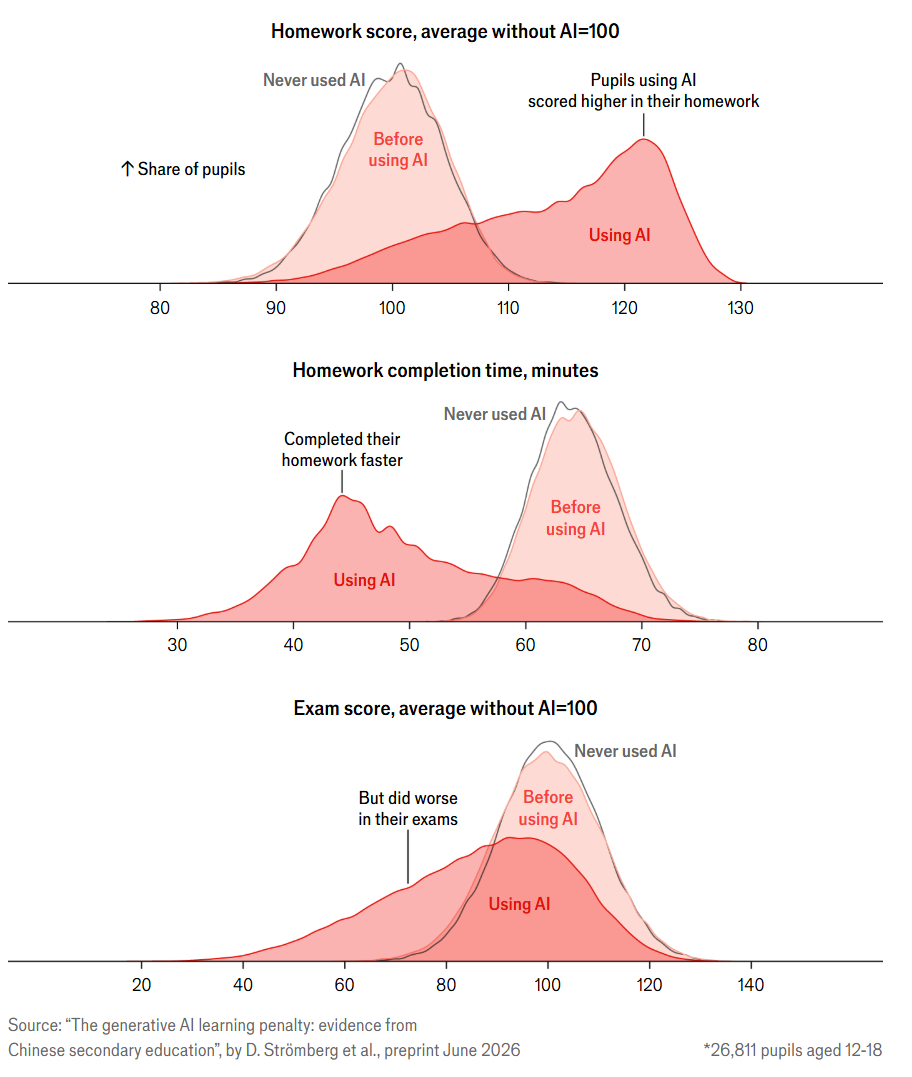
Quelle: The Economist
Quelle: The Economist
Hört auf mit egoistischem Kollateralschaden-Tagging!
Rant zu einem nervenden Phänomen in sozialen Netzen
Ich gebe es zu, ist warm hier im Büro. Aber das ist nicht der Grund, dass ich mich jetzt für diesen Rant hinsetze, es liegt eher daran, dass ich in der Sommerpause eher Zeit für solche Postings habe.
Worum geht es? Ich ärgere mich darüber, dass vermehrt User in sozialen Netzwerken Postings mit dem Namen anderer User kommentieren, damit diese auf das Posting aufmerksam werden:
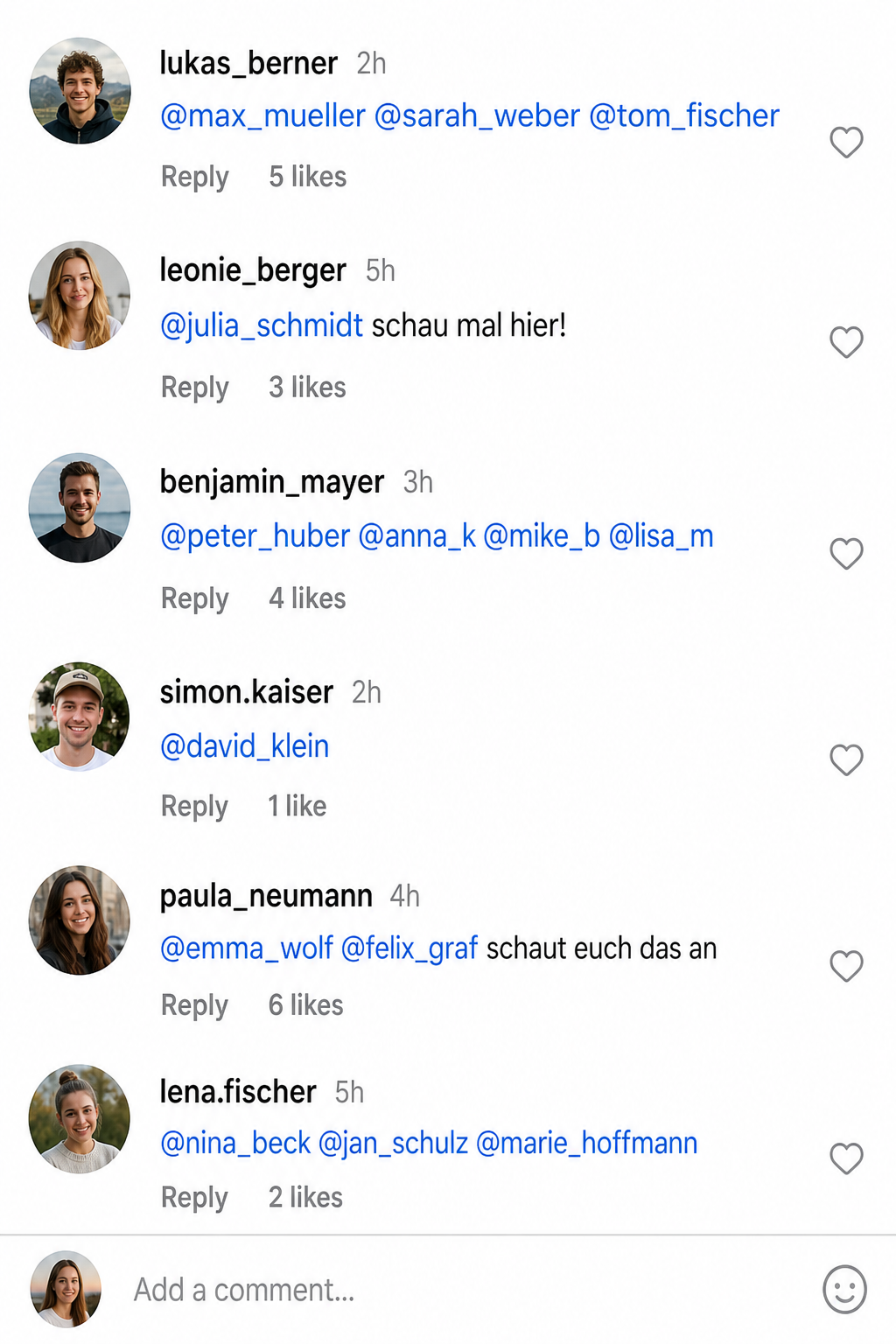
Computergeneriertes Symbolbild
(absichtlich exemplarisch lang, damit spürbar wird, wie mühsam das darüberhinwegscrollen ist...)
Warum mich das ärgert? Für mich ist das eine egoistische Form von digitalem Littering. Zwar werden die getaggten User wie gewünscht benachrichtigt, als Kollateralschaden werden aber auch viele andere User informiert (Notification spam) , dass ein Posting kommentiert worden ist und die Kommentarspalte füllt sich mit Beiträgen, die für 99% der User irrelevant sind (Thread-Verschmutzung). Damit wird die eigene Bequemlichkeit an erste Stelle gesetzt und die Verschlechterung des Signal-Noise-Verhältnisses für andere in Kauf genommen.
Just stop it. Postings lassen sich auch per privater Direktnachricht weiterleiten.
Computergeneriertes Symbolbild
(absichtlich exemplarisch lang, damit spürbar wird, wie mühsam das darüberhinwegscrollen ist...)
Was unterdessen bereits mein Büchergestell kann
Leistungsfähigkeit lokaler generativer Machine-Learning-Systeme
Dies ist eher eine Notiz für mich selbst - oder ein Eintrag in meinem eigenen Techniktagebuch. Im April 2026 hatte ich berichtet, dass ich mir einen Mac Mini für Experimente mit lokalen generativen Machine-Learning-Systemen (LGMLS, Biblionetz:w03773) gekauft hatte.
Erstaunlich, was diese Modelle bereits können. Ich habe meinen lokalen Chatbot gefragt:
was sind die vier kränkungen der menscheit (kopernikus, freud, ???, künstliche intelligenz)?
Copyright
© 2005-2025 Michael Daum This file is free software; you can redistribute it and/or modify it under the terms of the GNU General Public License as published by the Free Software Foundation; either version 2 of the License, or (at your option) any later version. For more details read the LICENSE. This program is distributed in the hope that it will be useful, but WITHOUT ANY WARRANTY, to the extent permitted by law; without even the implied warranty of MERCHANTABILITY or FITNESS FOR A PARTICULAR PURPOSE. Copyright © by the contributing authors. All material on this collaboration platform is the property of the contributing authors.
 Ideas, requests, problems regarding arbeitsgruppe.ch? Send feedback
This page was cached on 31 Aug 2026 - 23:04.